7 Best Coffee Machines in New Zealand 2025 : For Every Budget
Tired of burning your hard-earned dollars at cafés every morning? We get it! With a quality coffee machine at home, you could save thousands each year while enjoying barista-worthy brews in your pyjamas.
But choosing the right coffee machine can feel overwhelming. With hundreds of models on the New Zealand market ranging from $99 to $4000+, how do you know which is worth your money?
That’s where we come in. We’ve tested dozens of coffee machines available in NZ to bring you this definitive guide. Whether you’re a casual coffee drinker or a dedicated enthusiast, we’ve found the perfect coffee machine for your kitchen and budget.
What Are the Best Coffee Machines in New Zealand?
After thoroughly testing the most popular models available in New Zealand, we’ve narrowed down the 7 best coffee machines that deliver exceptional quality, value, and reliability. Here’s our comprehensive comparison table before we dive into the details:
| Model | Type | Price Range (NZD) | Best For | Key Features |
|---|---|---|---|---|
| Breville the Oracle Touch | Automatic Espresso | $3,499-$3,999 | Coffee enthusiasts | Automatic grinding, dosing, tamping; touch screen interface |
| Sunbeam Mini Barista | Manual Espresso | $379-$429 | Budget-conscious beginners | 58mm portafilter, 15 bar pump, steam wand |
| DeLonghi La Specialista | Semi-automatic Espresso | $1,149-$1,299 | Home baristas | Integrated grinder, smart tamping, dual heating system |
| Nescafe Dolce Gusto Infinissima | Pod System | $99-$149 | Convenience seekers | Compact design, variety of capsules, 15 bar pressure |
| Sunbeam Barista Max | All-in-one Espresso | $799-$899 | Value-conscious consumers | Integrated grinder, 58mm group head, powerful steam wand |
| Breville Bambino Plus | Compact Espresso | $649-$749 | Small kitchens | Automatic milk texturing, quick heat-up, compact design |
| DeLonghi Magnifica S | Bean-to-cup | $899-$999 | Families | One-touch operation, customisable coffees, easy cleaning |
1. Breville the Oracle Touch
The Oracle Touch represents the pinnacle of home coffee machines in New Zealand. This automatic espresso machine combines the convenience of a fully-automatic machine with the quality and customisation typically reserved for manual machines.
Key Benefits
- Automatic grinding, dosing, tamping and milk texturing for consistent results
- Intuitive touch screen interface with saved personalised drinks
- Dual boilers allow simultaneous extraction and milk steaming
- Commercial-grade 58mm portafilter for optimal extraction
- Programmable milk temperature and texture for perfect flat whites

Pricing
The Breville Oracle Touch is a premium investment at NZ$3,499-$3,999, placing it at the higher end of home coffee machines. However, for serious coffee enthusiasts, the cost equates to about one year of daily café visits.
Pros & Cons
Pros:
- Produces café-quality coffee with minimal skill required
- Exceptional milk texturing for perfect flat whites and cappuccinos
- Built to last with quality components and construction
Cons:
- Significant investment compared to other machines
- Large footprint requires substantial counter space
- Requires regular maintenance to maintain performance
2. Sunbeam Mini Barista
The Sunbeam Mini Barista offers an exceptional entry point into proper espresso making without breaking the bank, making it a favourite among Kiwi coffee lovers on a budget.
Key Benefits
- Commercial-sized 58mm portafilter for better extraction
- Powerful 15 bar Italian pump for authentic espresso
- Thermoblock heating system for quick heat-up
- Steam wand capable of creating microfoam for latte art
- Compact design suitable for smaller kitchens

Pricing
At NZ$379-$429, the Mini Barista represents excellent value for money in the New Zealand market, especially considering its commercial-sized portafilter and capable milk steaming.
Pros & Cons
Pros:
- Exceptional value for money
- Produces proper espresso with good crema
- Simple, intuitive operation suitable for beginners
Cons:
- No built-in grinder (requires separate purchase)
- Plastic components may affect longevity
- Limited cup clearance height
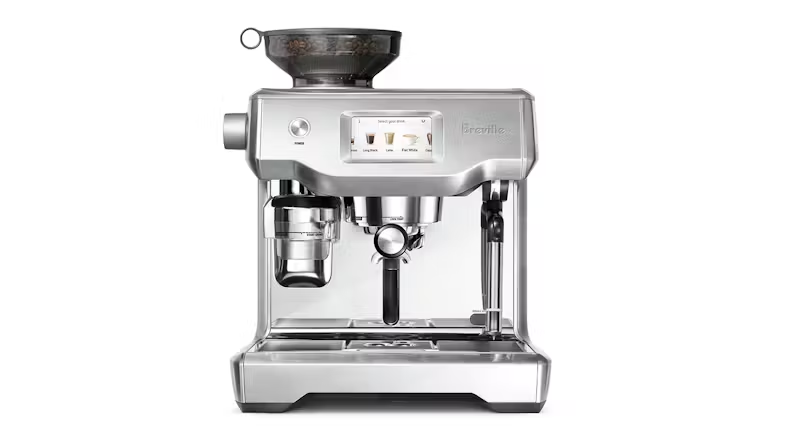
3. DeLonghi La Specialista
The DeLonghi La Specialista bridges the gap between fully automatic and manual espresso machines, offering precision and control with some helpful automated assistance.
Key Benefits
- Integrated conical burr grinder with 8 settings
- Smart tamping station for consistent pressure
- Dual heating system for optimal brewing and steaming
- Advanced Latte System for automatic milk texturing
- Active temperature control for extraction stability
Pricing
Priced between NZ$599-$1,299, the La Specialista sits in the mid-to-high range for home espresso machines in New Zealand, reflecting its build quality and feature set.
Pros & Cons
Pros:
- All-in-one solution eliminates need for separate grinder
- Smart tamping reduces mess and inconsistency
- Produces excellent espresso with proper technique
Cons:
- Steeper learning curve than fully automatic machines
- Grinder produces some static and retention
- Bulky design requires significant counter space
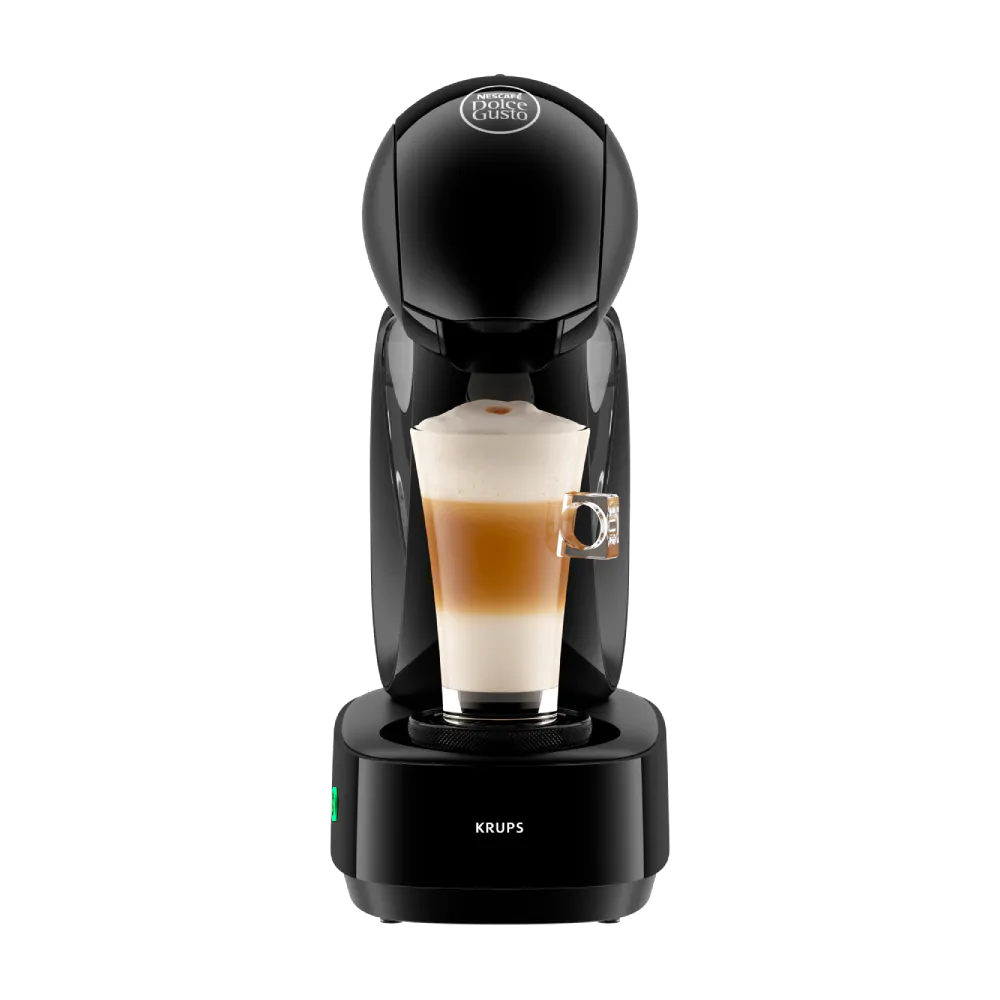
4. Nescafe Dolce Gusto Infinissima
For those prioritising convenience and simplicity, the Dolce Gusto Infinissima offers a fuss-free pod system that still delivers surprisingly good coffee.
Key Benefits
- Ultra-simple operation with pod-based system
- Compact, stylish design suits any kitchen
- 15 bar pump pressure for proper extraction
- Wide variety of beverage options (not just coffee)
- Quick heat-up time for coffee on demand
Pricing
At just NZ$65-$149, the Infinissima is the most affordable option on our list, though ongoing pod costs (approximately $0.70-$1.00 per coffee) should be factored into long-term ownership.
Pros & Cons
Pros:
- Extremely affordable entry point
- No cleaning or maintenance required
- Consistent results every time
Cons:
- Ongoing pod costs add up over time
- Limited to Nescafe’s pod selection
- Environmental impact of disposable pods
- Not “true” espresso for purists
5. Sunbeam Barista Max
The Barista Max represents excellent value by combining a capable espresso machine with an integrated grinder in a reasonably compact package.
Key Benefits
- Built-in conical burr grinder with 30 grind settings
- Commercial-sized 58mm group head and portafilter
- Powerful steam wand capable of creating microfoam
- Tap & Go™ grinding directly into portafilter
- 2L water tank for fewer refills

Pricing
Priced between NZ$649-$899, the Barista Max offers excellent value considering it includes both machine and grinder in one package.
Pros & Cons
Pros:
- All-in-one solution saves money and counter space
- Commercial-sized portafilter for proper extraction
- Great value compared to buying separate components
Cons:
- Grinder quality not comparable to standalone units
- Plastic components may affect longevity
- Less temperature stability than higher-end machines
6. Breville Bambino Plus
The Bambino Plus packs impressive capabilities into a surprisingly compact footprint, making it perfect for space-conscious Kiwi kitchens.
Key Benefits
- Automatic hands-free milk texturing with adjustable temperature
- Thermojet heating system reaches optimal temperature in 3 seconds
- Commercial-style 54mm portafilter for proper extraction
- Pre-infusion function for even extraction
- Incredibly compact design saves precious bench space

Pricing
With a price range of NZ$649-$749, the Bambino Plus sits in the mid-range segment but delivers performance comparable to larger, more expensive machines.
Pros & Cons
Pros:
- Takes up minimal counter space
- Incredibly fast heat-up time
- Automatic milk texturing perfect for beginners
Cons:
- No built-in grinder (requires separate purchase)
- Smaller water tank requires frequent refilling
- Limited customisation compared to higher-end models
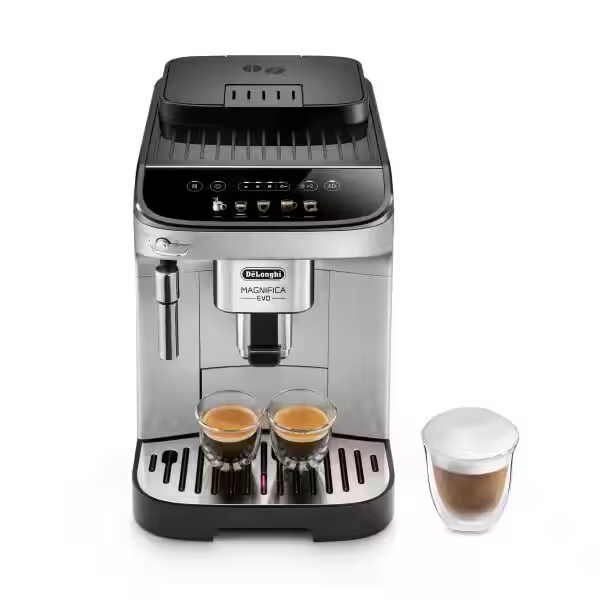
7. DeLonghi Magnifica S
The Magnifica S offers a true bean-to-cup experience with one-touch operation that’s perfect for households where multiple people make coffee.
Key Benefits
- Fully automatic operation from beans to cup
- 13-setting conical burr grinder built-in
- Customisable coffee strength and temperature
- Automatic milk frothing system for lattes and cappuccinos
- Easy cleaning and maintenance programs
Pricing
Priced between NZ$899-$999, the Magnifica S represents good value for a fully automatic bean-to-cup machine in the New Zealand market.
Pros & Cons
Pros:
- Incredibly simple operation for any user
- Consistent results without barista knowledge
- Freshly ground coffee with every cup
Cons:
- Less “hands-on” experience than manual machines
- Milk texturing not comparable to manual steam wands
- Automatic systems require regular cleaning
What Is a Coffee Machine?
A coffee machine is an appliance designed to brew coffee by forcing pressurised water through ground coffee beans. While the term encompasses everything from simple filter machines to complex espresso systems, in New Zealand, we typically use it to refer to espresso-based machines—the type that produces the flat whites, long blacks, and lattes that Kiwis love. And also you can read our blog on how to choose a coffee machine for more details !
Coffee machines can be categorised into several types:
- Manual Espresso Machines: Require the user to grind, dose, tamp and extract manually
- Semi-Automatic Machines: Automate some processes while keeping others manual
- Fully Automatic Machines: Handle the entire process from beans to cup with minimal intervention
- Pod/Capsule Systems: Use pre-packaged coffee pods for maximum convenience
How Can Coffee Machines Benefit You?
Financial Savings with Best Coffee Machines in New Zealand
With café coffees in New Zealand averaging $5-$6, a home coffee machine can pay for itself surprisingly quickly.
Even a mid-range machine like the Sunbeam Barista Max ($799) would pay for itself after about 160 café coffees—that’s just over 5 months for a daily coffee drinker.
Convenience
No more waiting in café queues or making special trips for your caffeine fix. A home coffee machine gives you barista-quality coffee whenever you want it, even in your pyjamas on a rainy Sunday morning.
Customisation
Once you have your own machine, you can perfect your coffee exactly to your taste—stronger, weaker, hotter, with different beans, or alternative milk. You become the barista, crafting your perfect cup every time.
Skill Development
Many Kiwis take pride in developing their coffee-making skills. Learning to use a manual or semi-automatic machine can become a rewarding hobby that impresses friends and family.
Buyers Guide: How We Conducted Our Research
When determining the best coffee machines available in New Zealand, we evaluated each product based on:
- Performance: How consistently does the machine produce quality coffee? We tested extraction quality, temperature stability, and milk texturing capabilities.
- Value for Money: We compared features against price point to determine which machines offer the best return on investment for Kiwi consumers.
- Build Quality: We assessed the materials, construction, and expected longevity of each machine.
- User-Friendliness: We considered the learning curve, daily operation, and maintenance requirements.
- Availability in NZ: We only included machines readily available from New Zealand retailers with local warranty support.
- Local Reviews: We considered feedback from New Zealand users who have used these machines in Kiwi households.
- Expert Input: We consulted with former baristas and coffee professionals to gain insider perspectives on each machine.
- Running Costs: We calculated the long-term ownership costs, including power consumption, maintenance, and any ongoing expenses like pods.
Conclusion
Finding the perfect coffee machine for your New Zealand home doesn’t need to be overwhelming.
For those seeking the absolute best regardless of price, the Breville Oracle Touch delivers café-quality results with minimal effort. Budget-conscious buyers will find the Sunbeam Mini Barista offers impressive performance at a fraction of the cost.
And if convenience is your priority, the Nescafe Dolce Gusto Infinissima provides fuss-free coffee at an affordable price point.
Remember that the “best” coffee machine ultimately depends on your personal preferences, budget, and how much involvement you want in the coffee-making process. Whichever model you choose from our list, you’ll be enjoying better coffee and saving money compared to daily café visits.
Frequently Asked Questions
How much should I spend on a coffee machine in New Zealand?
Entry-level espresso machines start around $300-$400, mid-range options between $600-$1,200, and premium machines from $1,500 to $4,000+.
For most home users, the $600-$1,000 range offers the best balance of quality and value.
Do I need a separate grinder with my coffee machine?
Unless your machine has a built-in grinder (like the Breville Oracle Touch or Sunbeam Barista Max), a separate grinder is highly recommended.
Pre-ground coffee loses flavour quickly and won’t produce optimal results in a quality espresso machine.
How long should a good coffee machine last?
With proper maintenance, a quality coffee machine should last 5-10 years. Higher-end machines with replaceable parts can often last longer with periodic servicing.
Are pod machines environmentally friendly?
Traditional coffee pods create significant waste. However, many brands now offer compostable or recyclable options. For the most eco-friendly approach, machines that use whole beans or ground coffee produce less waste overall.
What’s the difference between a $400 and $4,000 coffee machine?
Higher-priced machines typically offer better temperature stability, pressure consistency, build quality, milk texturing capability, and automation features.
They also generally last longer and produce more consistent results cup after cup.
How much maintenance do coffee machines require?
All coffee machines require some maintenance. This ranges from simple rinsing and occasional descaling for pod machines to more involved cleaning routines for traditional espresso machines.
Generally, the more complex the machine, the more maintenance it requires.
Can I make flat whites with all these machines?
Yes, all the machines on our list can make flat whites, though the quality and process vary.
Machines with proper steam wands (all except the pod system) will produce more authentic microfoam for true flat whites.